
Ingredients
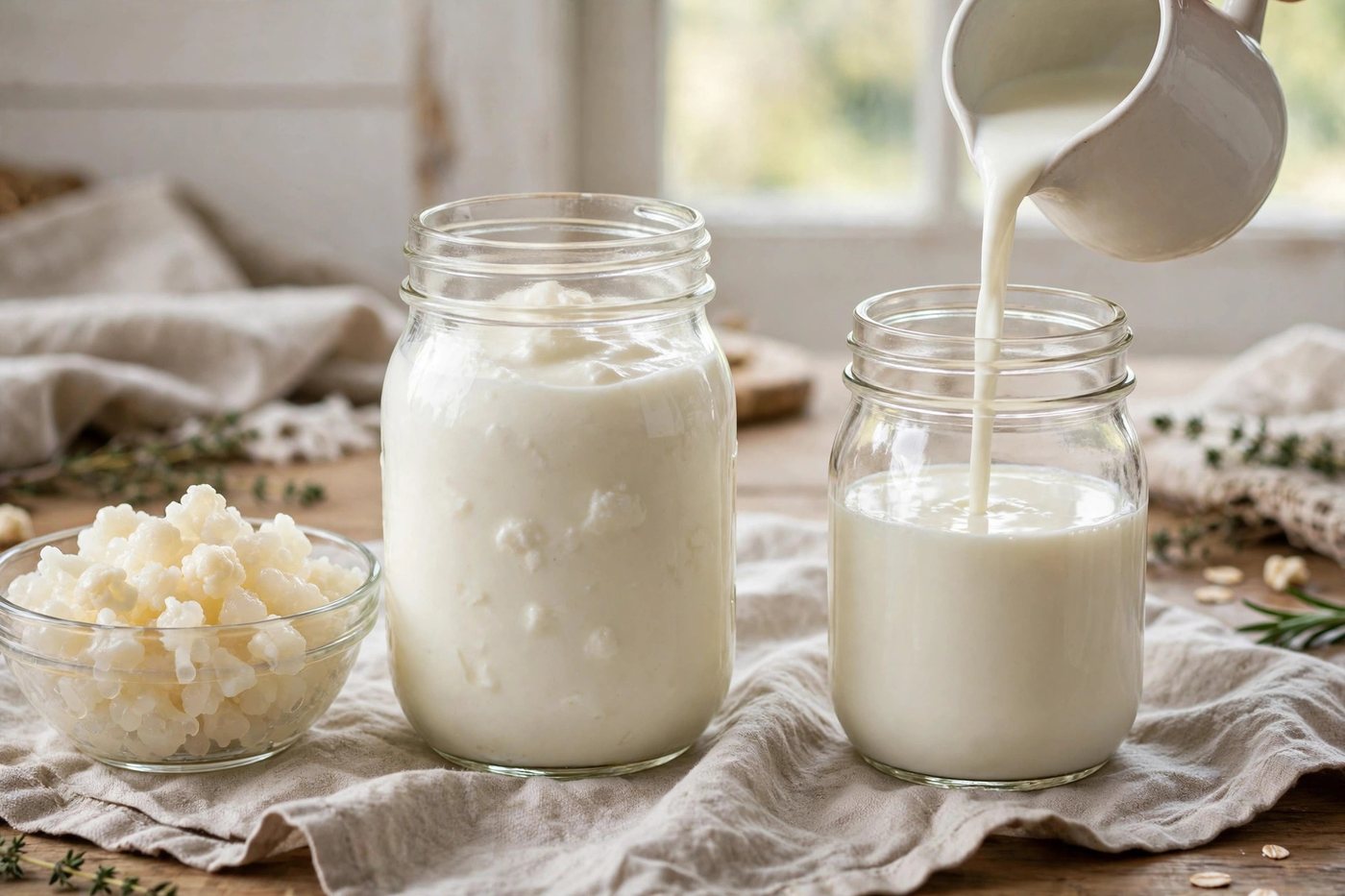
- 1 tbsp active milk kefir grains
- 4 cups whole milk, pasteurized (not ultra-pasteurized), at room temperature
You will also need: a clean quart-size glass jar, a plastic or wooden strainer (avoid metal with the grains), a coffee filter or clean cloth, and a rubber band.
Instructions
- Combine grains and milk. Add the kefir grains to the jar and pour in the milk, leaving 1–2 inches of headspace at the top.
- Cover and wait. Cover the jar with a coffee filter or cloth and secure it with a rubber band. Leave it at room temperature (68–78°F / 20–26°C) for 24 hours, out of direct sunlight.
- Check for doneness. The kefir is ready when slightly thickened and pleasantly tangy — like drinkable yogurt. A few small pockets of whey are fine; if it's fully separated into curds and whey, it went a little long (still fine — just shake it).
- Strain. Pour through a plastic or wooden strainer into a clean jar or bottle, gently stirring the grains to release all the kefir.
- Second ferment (optional). Cover the strained kefir and leave it at room temperature 6–12 more hours for extra tang and natural fizz, then refrigerate. Put the grains straight back in the jar with fresh milk to start your next batch.
💡 Kefir tips
Your grains are alive and reusable forever — they'll even multiply, so you'll have extras to share. Ultra-pasteurized milk often ferments poorly, so choose regular pasteurized milk. Too sour? Ferment a few hours less or use more milk. Too thin? Ferment a little longer. If you need a break, rest the grains in fresh milk in the fridge for up to a week.
Save for later
Love this recipe?
Save it to your "Healthy Kitchen" board so your fermentation guide is always handy.
📌 Pin it for later